
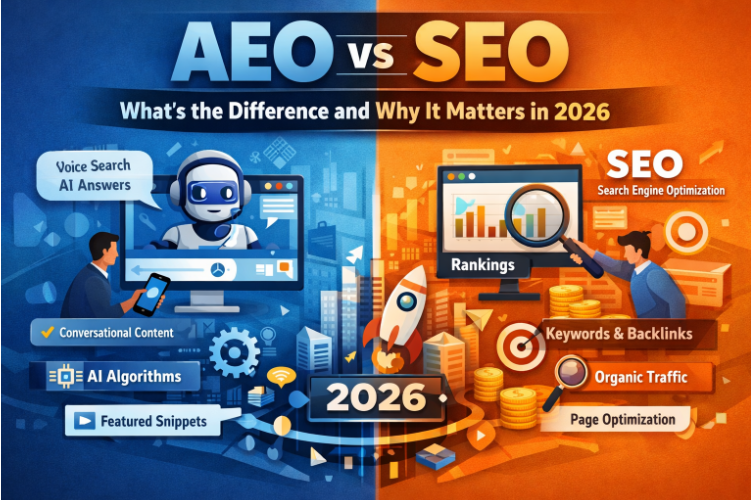
SEO vs AEO: What’s the Difference and Why It Matters in 2026
In the fast-changing world of digital marketing, businesses must adapt to how users search for information online. Two important strategies dominating today are Search Engine Optimization (SEO) and Answer Engine Optimization (AEO). While both aim to improve visibility, they work in different ways and serve different purposes.
What is SEO?
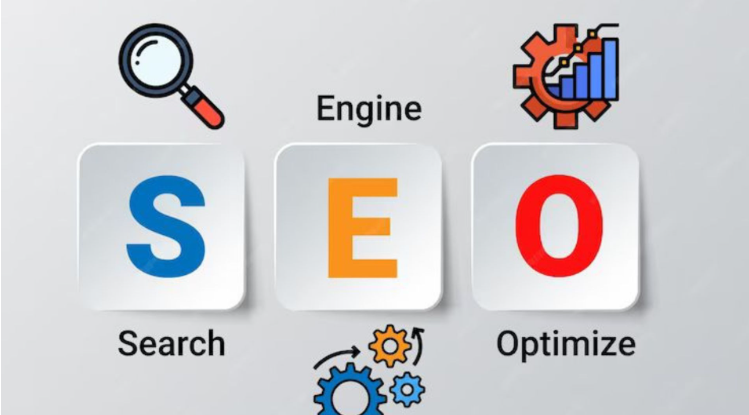
Search Engine Optimization (SEO) is the process of improving a website’s visibility on search engines like Google and Bing. The goal is to rank higher on search engine results pages (SERPs) and drive organic traffic to your website.
Key Features of SEO:
Keyword optimization
On-page and off-page strategies
Link building
Technical optimization
Content creation for ranking
SEO focuses on helping users find your website when they search for specific keywords.
Search engines use advanced algorithms to decide which pages appear first. SEO works by aligning your website with these algorithms.
The basic process:
Crawling – Search engines scan your website using bots
Indexing – Your pages are stored in a database
Ranking – Pages are ranked based on relevance and quality
If your website is well-optimized, it has a better chance of appearing on the first page.
On-page SEO focuses on optimizing the content and structure of your website.
Key elements:
Keyword optimization
Title tags and meta descriptions
High-quality content
Image optimization
Internal linking
This ensures your content is relevant and easy for search engines to understand.
SEO is constantly evolving with technology. Today, it includes:
Voice search optimization
AI-based search results
User intent focus
Answer Engine Optimization (AEO)
Search engines are becoming smarter, focusing more on quality content and user satisfaction.
On-Page SEO (Content Optimization)
This focuses on optimizing what users see on your website.
Includes:
Keyword placement (title, headings, content)
Meta tags (title & description)
URL structure
Internal linking
Content readability
Image SEO (alt text, size optimization)
This helps search engines understand your content clearly.
Off-Page SEO (Authority Building)
This builds your website’s reputation and trust.
Includes:
Backlinks from high-authority sites
Social signals
Brand mentions
Guest posting
Influencer collaborations
The more authority your website has, the better it ranks.
Understanding Search Intent (Very Important)
Modern SEO is driven by search intent—the reason behind a user’s query.
Types of Search Intent:
Informational – “What is SEO?”
Navigational – “Facebook login”
Transactional – “Buy iPhone online”
Commercial – “Best laptops 2026”
To rank well, your content must match the user’s intent perfectly.
Content Optimization Strategy
Content is the backbone of SEO. But not just any content—high-quality, helpful, and user-focused content.
What Makes SEO Content Powerful:
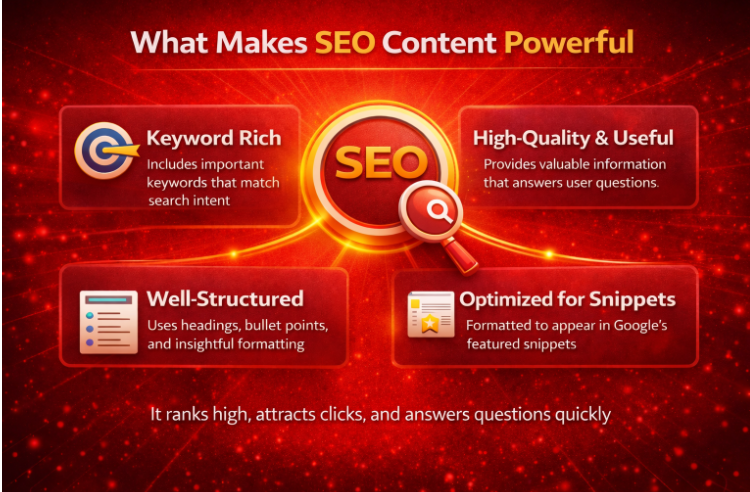
Solves user problems
Easy to read and structured
Includes keywords naturally
Updated regularly
Includes headings, lists, and visuals
Search Engine Optimization (SEO) is the process of improving a website so it appears higher in organic (unpaid) search results on platforms like Google and Bing. The aim is not just to increase traffic, but to attract the right audience who are genuinely interested in your content, products, or services.
SEO is a combination of strategy, creativity, and technical improvement that helps your website become more visible, useful, and trustworthy.
SEO is not just a marketing technique—it is a long-term strategy for building online visibility and trust. It requires a balance of content quality, technical performance, and user understanding.
When done correctly, SEO helps you:
Reach the right audience
Build credibility
Grow your business sustainably
Understanding Search Intent (Very Important)
Modern SEO is no longer just about keywords—it’s about understanding why users search.
Types of Search Intent:
Informational – “What is SEO?”
Navigational – “Facebook login”
Transactional – “Buy iPhone online”
Commercial – “Best laptops 2026”
To rank successfully, your content must match the user’s intent perfectly. If your content doesn’t satisfy the user’s need, it won’t perform well—no matter how well optimized it is.
The true goal of SEO is to solve user problems.
Search engines prioritize websites that:
Provide clear answers
Offer real value
Deliver a smooth user experience
Build trust over time
If your website satisfies users, search engines will reward it with better rankings.
Deep Dive into SEO Components
- Content Optimization
Content is the foundation of SEO. A well-optimized page should:
Answer user questions clearly
Be easy to read and structured
Use headings and subheadings
Include relevant keywords naturally
Provide updated and accurate information
Content should always focus on helping the user first.
Role of User Experience (UX) in SEO
SEO is no longer separate from user experience.
Search engines now consider:
How long users stay on your site
How quickly pages load
How easy it is to navigate
Whether users find what they need
A better experience leads to better rankings.
Local SEO Importance

For businesses targeting nearby customers, local SEO is essential.
It helps your business appear in location-based searches and maps.
Key actions include:
Creating and optimizing your business profile
Using local keywords
Collecting genuine reviews
Keeping business information consisten
Common Challenges in SEO

High competition in popular keywords
Constant algorithm changes
Time required for results
Need for continuous updates
Despite challenges, consistent effort brings strong results.
Future of SEO
SEO continues to evolve with technology.
Key Trends:
Voice-based searches
AI-generated answers
Personalized search results
Visual and video search
Websites that focus on clarity, trust, and user value will stay ahead.
Key Features of AEO
AEO requires a different content approach:
Focus on question-based queries
Clear and concise answers
Structured data (schema markup)
FAQ sections
Conversational tone
The goal is to make your content easily understandable for both users and AI systems.
What is AEO?
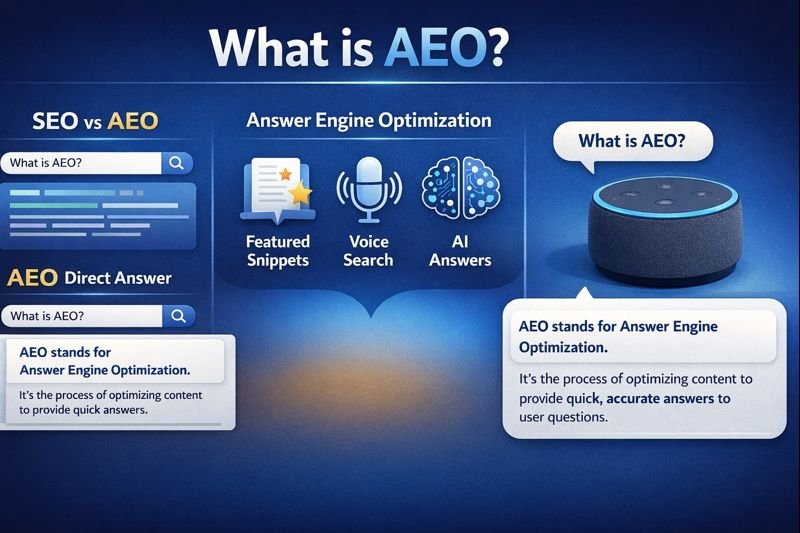
Answer Engine Optimization (AEO) is the process of optimizing content to provide direct, clear answers to user queries, especially for AI-driven platforms and voice assistants like Google Assistant, Siri, and Amazon Alexa.Instead of focusing only on ranking links, AEO focuses on becoming the best answer.
AEO is designed for:
Voice search results
Featured snippets
AI-generated responses
How to Combine SEO and AEO:

Use keywords + question-based queries
Create high-quality content
Add FAQ sections
Use structured data
Optimize for voice search
This approach ensures you rank well and also become the top answer.
Why SEO Alone is Not Enough AnymoreIn the past, ranking on the first page of search results was the ultimate goal. But today, many users get their answers directly from search results without clicking any link.This is known as zero-click search.
Because of this, relying only on SEO can limit your visibility. Businesses need AEO to stay relevant in this new search environment.
Why SEO Alone is Not Enough Anymore
In the past, ranking on the first page of search results was the ultimate goal. But today, many users get their answers directly from search results without clicking any link.This is known as zero-click search.Because of this, relying only on SEO can limit your visibility. Businesses need AEO to stay relevant in this new search environment.
Benefits of Combining SEO and AEO
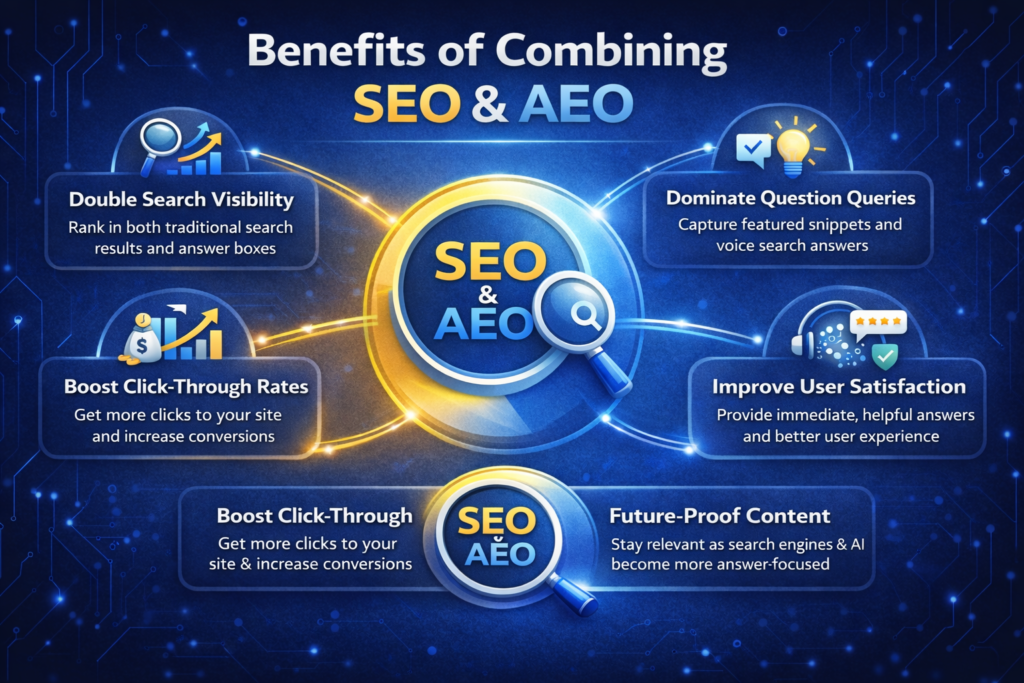
The most effective strategy in 2026 is to combine both SEO and AEO
Advantages:
Reach users across multiple platforms
Capture both clicks and instant answers
Improve brand visibility
Stay ahead of competitors
Adapt to future search trends
SEO brings users to your website, while AEO ensures your content is seen even without clicks.